
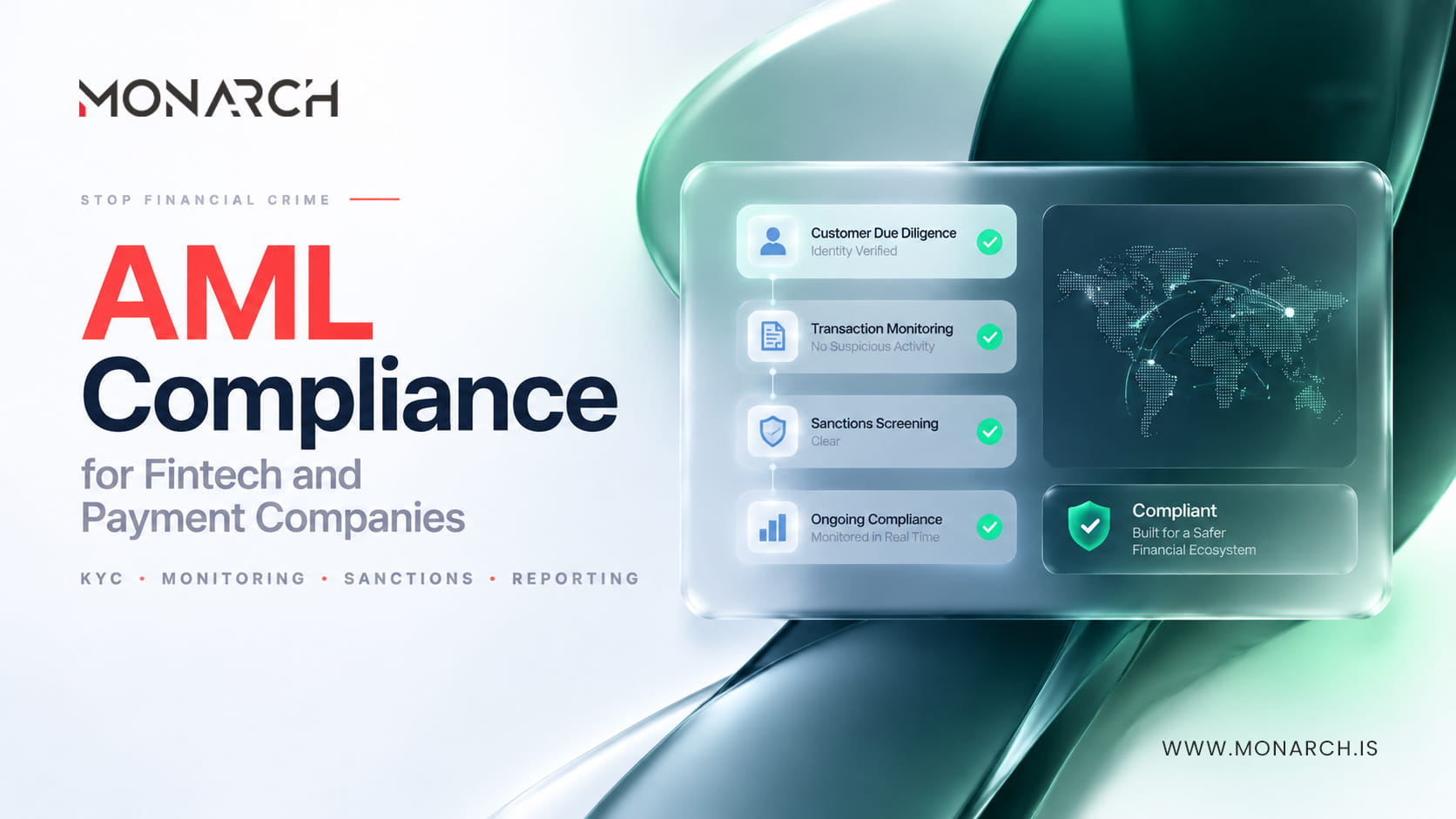
Money moves faster than ever. A customer can send funds from a phone, a business can settle invoices online, and a payment company can process thousands of transactions before lunch.
Thank you for reading this post, don't forget to subscribe!
That speed is powerful. But it also creates risk.
When financial platforms do not know who is using their system, where money is coming from, or whether transaction patterns look suspicious, the entire payment ecosystem becomes vulnerable. Fraudsters, shell companies, stolen identities, and criminal networks look for weak points. Fintech and payment companies cannot afford to be that weak point.
That is why AML compliance gives modern financial companies a stronger way to protect customers, banking relationships, and long-term growth.
AML stands for anti-money laundering. In simple terms, it means having the right policies, systems, and controls to help prevent a financial platform from being used to move illegal funds or support financial crime.
For fintech and payment companies, anti-money laundering is not just a regulatory requirement. It is a trust layer.
What Is Anti-Money Laundering?
Anti-money laundering refers to the systems companies use to detect, prevent, and report suspicious financial activity.
Money laundering usually happens when illegal funds are moved through financial systems to make them appear legitimate. This can involve fake businesses, layered transactions, cross-border transfers, unusual payment activity, or complex ownership structures.
Fintech and payment companies face this risk because they often sit directly inside the money movement process. They may support digital wallets, ACH payments, card payments, P2P transfers, vendor payments, business payouts, or international transfers.
Every one of those payment flows can be useful for legitimate customers. But without the right controls, those same flows can also be misused.
A strong anti-money laundering framework helps a company understand who its users are, monitor how money moves, detect unusual activity, and maintain records that support reviews, audits, and reporting.
Why AML Compliance Matters for Fintech and Payment Companies
Payment companies are built on trust.
Customers trust the platform to move money safely. Banks trust the platform to manage risk. Regulators expect the platform to follow financial crime rules. Business partners expect clean records, secure onboarding, and transparent operations.
AML Compliance Matters because one weak control can create major consequences.
A fintech company with poor identity checks may onboard fake users. A payment platform with weak transaction monitoring may miss suspicious patterns. A company with scattered records may struggle during an audit. A platform without proper escalation workflows may fail to investigate activity that should have been reviewed.
The result can include fraud losses, account closures, regulatory pressure, reputational damage, delayed banking approvals, and customer trust problems.
For payment companies, the cost of ignoring anti-money laundering controls is much higher than the cost of building them properly.
What an AML Compliance Program Usually Includes
An AML Compliance Program is the structured system a financial company uses to manage money laundering and financial crime risk.
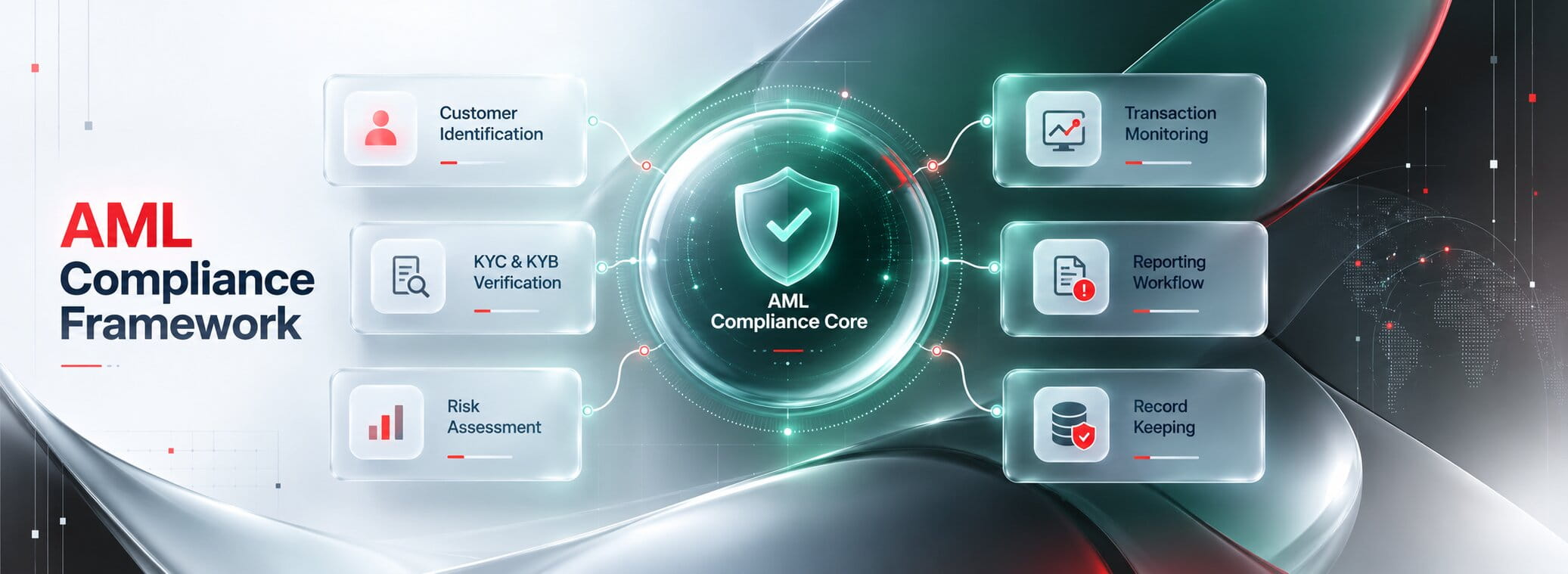
While exact requirements depend on the company type, products, jurisdiction, and regulatory status, most strong programs include several core components.
These usually include written policies and procedures, customer identification, business verification, risk assessment, transaction monitoring, recordkeeping, employee training, reporting workflows, and independent review.
For fintech companies, the program also needs to match the product. A digital wallet company may face different risks than a bill pay platform. A P2P payment app may need different monitoring rules than a B2B settlement platform. A company serving regulated industries may need deeper onboarding and stronger documentation.
The best anti-money laundering programs are risk-based. They are not generic templates. They are designed around how the business actually moves money.
KYC and KYB: Knowing Who Uses the Platform
KYC means Know Your Customer. KYB means Know Your Business.
Both are essential for fintech and payment companies.
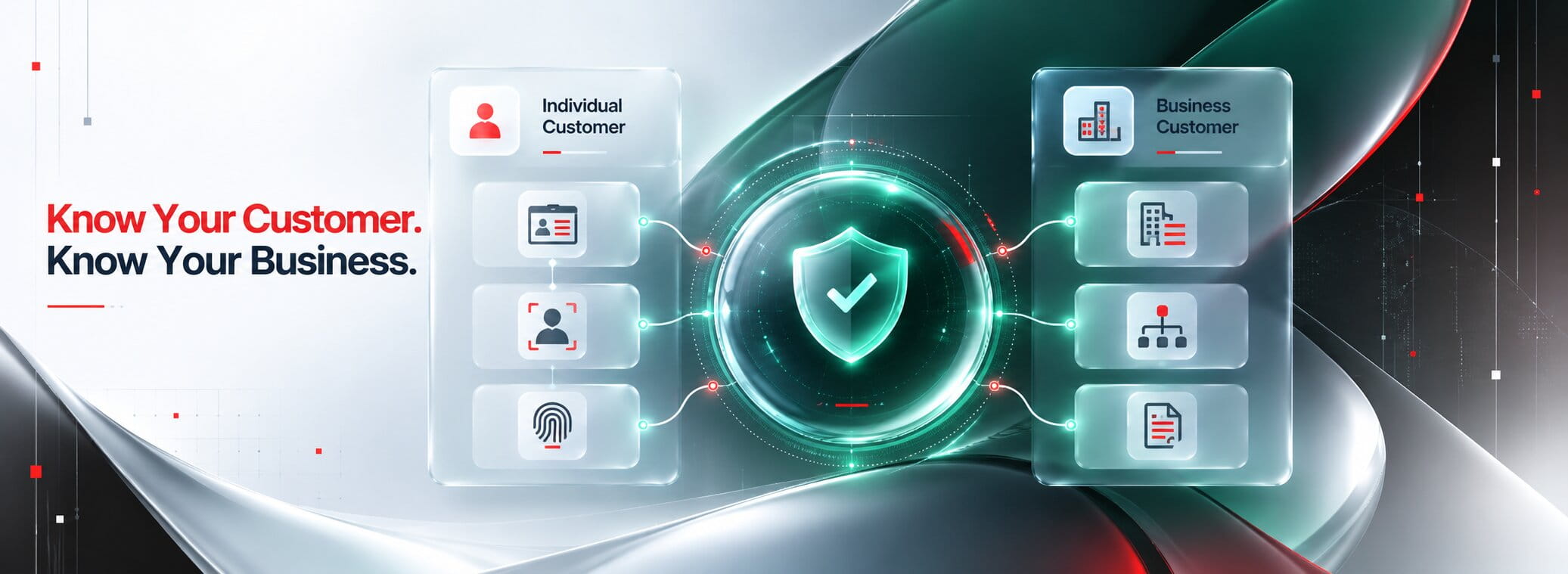
KYC focuses on verifying individual users. This may include name, date of birth, address, government ID, phone number, email, and other identity signals.
KYB focuses on business customers. This may include company registration, ownership information, business address, tax information, licensing, industry type, expected transaction volume, and beneficial ownership details.
The goal is not to create paperwork for no reason. The goal is to understand who is entering the financial system.
A payment platform should know whether a user is a real individual, a legitimate business, a licensed operator, or a higher-risk customer that needs additional review.
Without KYC and KYB, transaction monitoring becomes weaker. A platform cannot easily identify unusual activity if it never understood the customer’s expected behavior in the first place.
Customer Due Diligence and Risk Scoring
Customer due diligence goes deeper than identity verification.
It helps a fintech or payment company understand the nature and purpose of a customer relationship. In other words, what does this customer do, why are they using the platform, and what kind of activity should the company expect?
A low-risk customer may require standard review. A higher-risk customer may require enhanced due diligence.
For example, a small retail business using normal payment flows may look very different from a high-volume cross-border business with complex ownership, cash-heavy operations, or unusual settlement patterns.
Risk scoring helps companies organize this review process. A customer’s risk profile may be based on business type, geography, transaction volume, ownership structure, payment method, customer history, sanctions exposure, and regulatory category.
This allows fintech companies to apply the right level of review instead of treating every customer exactly the same.
Transaction Monitoring: Watching the Money Flow
Transaction monitoring is one of the most important parts of anti-money laundering operations.
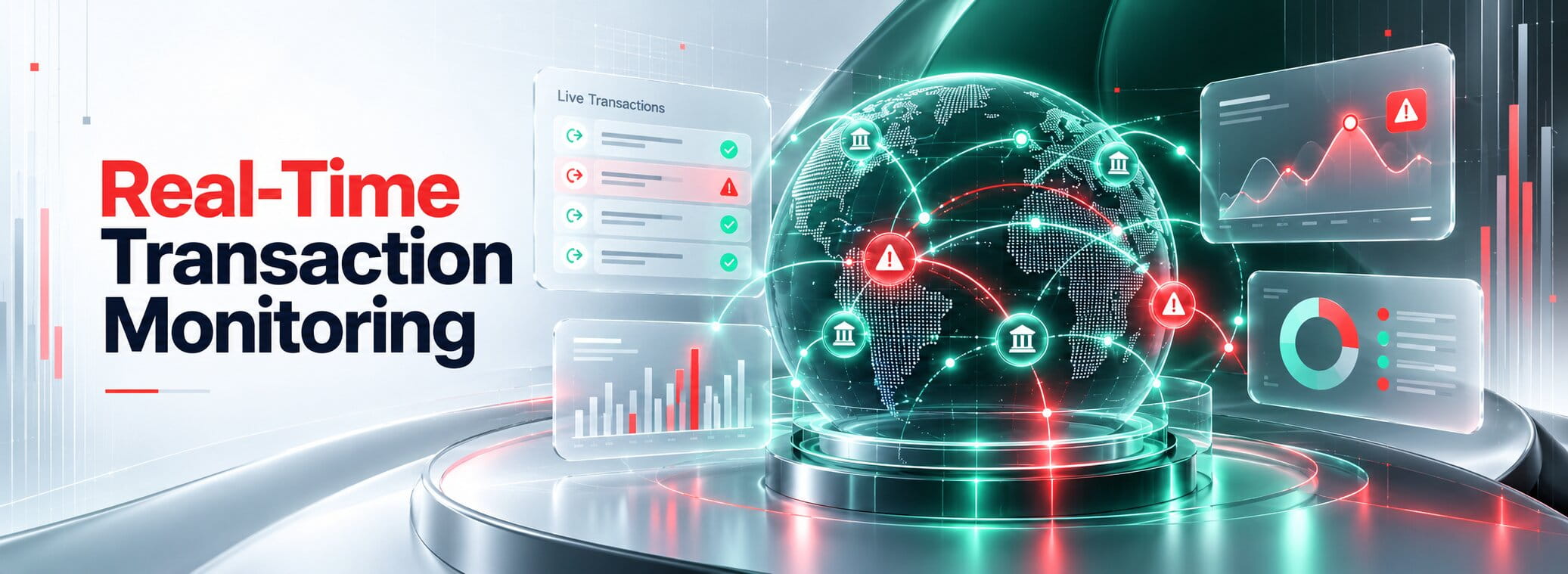
Once customers are onboarded, the company needs to monitor how money moves through the platform. The goal is to detect unusual behavior, suspicious patterns, and activity that does not match the customer’s profile.
Examples may include sudden volume spikes, repeated failed payments, rapid movement of funds between accounts, unusual refund behavior, inconsistent transaction locations, high-risk counterparties, or patterns designed to avoid reporting thresholds.
For fintech and payment companies, monitoring must be practical and scalable. Manual review alone is not enough when transactions happen in large volume and in real time.
A strong platform should combine rules, risk signals, alerts, documentation, and human review. The system should help teams decide what needs attention, what can be cleared, and what should be escalated.
Good monitoring does not just protect the company. It protects customers, banking partners, and the wider financial system.
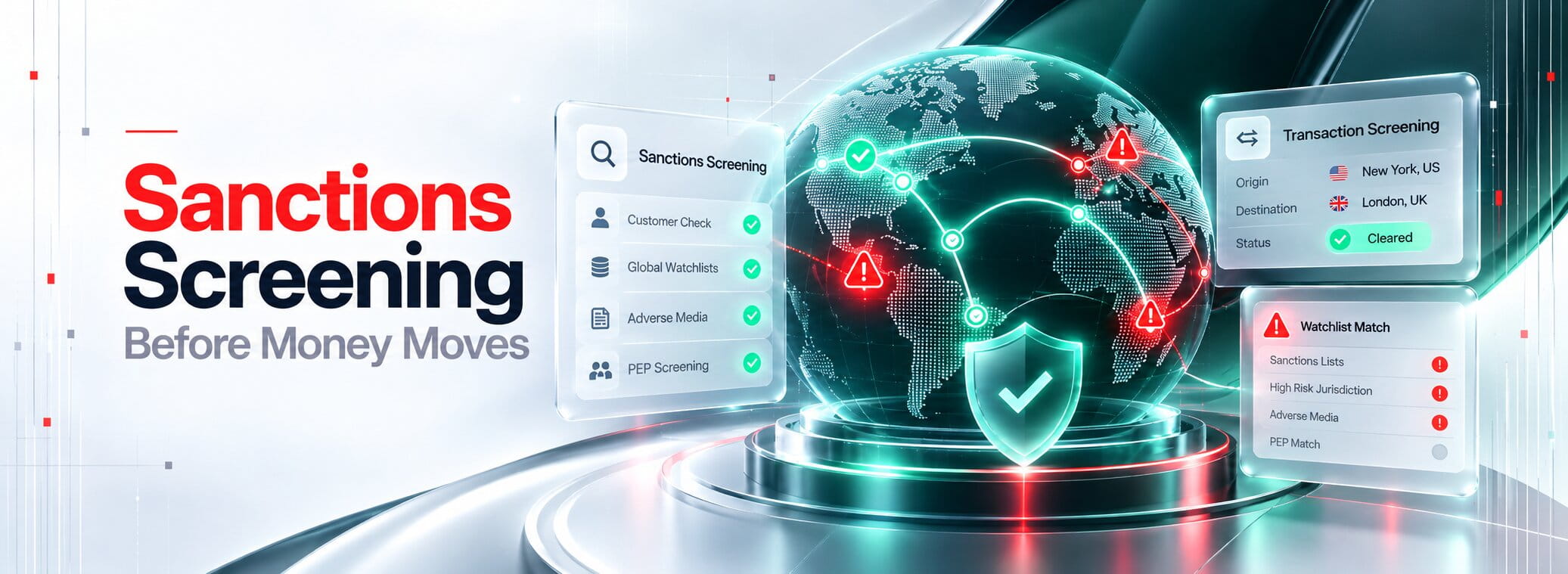
Sanctions Screening and Watchlist Checks
Anti-money laundering controls are closely connected to sanctions screening.
Payment companies need to avoid doing business with blocked persons, sanctioned entities, or prohibited jurisdictions. This becomes more important when a platform supports cross-border payments, digital wallets, business payouts, or international transfers.
Sanctions screening may happen during onboarding and again during transaction activity. A customer, business owner, vendor, or counterparty may need to be checked against relevant watchlists.
This process also needs ongoing updates. Sanctions lists can change. Business ownership can change. Customers can become higher risk over time.
For fintech companies, screening should not be treated as a one-time formality. It should be part of the customer lifecycle.
Suspicious Activity and Escalation Workflows
When a system detects unusual activity, the company needs a clear process.
Who reviews the alert?
What information should be checked?
When should the case be escalated?
Who decides whether activity is suspicious?
How are notes documented?
How long are records retained?
What happens if the account needs to be restricted?
These workflows matter because detection alone is not enough.
A payment platform may have good alerts, but if the team does not know how to handle them, risk remains. Strong internal procedures help compliance teams respond consistently and avoid confusion.
This is especially important for companies growing quickly. As volume increases, teams need repeatable processes instead of one-off decisions.
Recordkeeping and Audit Readiness
Fintech and payment companies need clean records.
A company should be able to show how customers were verified, how risk decisions were made, how alerts were reviewed, how suspicious activity was handled, and how policies were updated.
Poor recordkeeping creates serious problems.
Even if a company made the right decision, it may struggle to prove it later without proper documentation. Banking partners, auditors, regulators, and internal leadership all need reliable records.
Audit readiness should not begin when an audit starts. It should be built into daily operations.
This means customer files, transaction data, compliance notes, policies, reports, and approval trails should be organized, secure, and accessible to the right team members.
Common AML Mistakes Fintech Companies Should Avoid
Many fintech companies make the same mistake: they build the product first and think about compliance later.
That approach is risky.
Anti-money laundering controls should be built into the platform from the beginning. If compliance is added too late, the company may need to rebuild onboarding, payment flows, data storage, monitoring tools, and reporting workflows.
Other common mistakes include using generic policies, relying only on manual review, ignoring KYB for business customers, failing to update customer information, treating monitoring as optional, and keeping compliance records in disconnected systems.
Another mistake is assuming that outsourcing a tool removes responsibility. Vendors can help, but the company still needs oversight, policy ownership, and internal accountability.
Strong AML compliance also requires regular updates. Financial crime patterns change. Regulations change. Payment methods change. A program that worked two years ago may not be enough today.
How Monarch Supports Fintech and Payment Compliance
Monarch is built for businesses, banks, and regulated industries that need secure financial infrastructure for money movement, payments, compliance, tax automation, reporting, and operational control.
For fintech and payment companies, Monarch supports a more organized way to manage the financial workflows behind transactions. Instead of relying on disconnected tools, companies can benefit from infrastructure designed around secure money movement, documentation, monitoring, and audit readiness.
This matters because compliance is not separate from payments. Every payment creates data. Every customer creates risk context. Every transaction needs visibility. Every regulated workflow needs documentation.
Monarch supports AML compliance by helping organizations bring payments, compliance workflows, reporting, and operational transparency into a more connected environment.
For companies serving regulated industries or working with banking partners, that foundation can help reduce friction, improve oversight, and support more confident growth.
Why Anti-Money Laundering Is Also a Growth Strategy
Many companies see anti-money laundering as a cost center.
That is the wrong lens.
A strong compliance foundation can help fintech and payment companies grow more safely. It can improve banking relationships, reduce fraud exposure, support faster reviews, create better customer onboarding, and prepare the company for larger partners or regulated markets.
Enterprise customers and financial institutions want to work with platforms they can trust. They want to know that identity, payments, monitoring, records, and reporting are handled properly.
That is why anti-money laundering is not only about avoiding penalties. It is about building a company that can scale without losing control.
A platform with weak controls may grow quickly at first, but it can break under pressure. A platform with strong controls can move faster because the foundation is already in place.
Final Thoughts
Fintech and payment companies operate in one of the most sensitive parts of modern commerce: money movement.
That creates enormous opportunity, but it also creates serious responsibility.
AML compliance is not just a rulebook. It is a system for knowing customers, understanding risk, monitoring transactions, protecting banking relationships, and keeping financial activity trustworthy.
As payment platforms grow, anti-money laundering controls must grow with them. KYC, KYB, due diligence, transaction monitoring, sanctions screening, escalation workflows, and audit-ready records should not be treated as separate tasks. They should work together as part of one connected financial infrastructure.
Monarch helps businesses and financial partners build that kind of foundation through secure, compliant money movement and financial operations infrastructure.
Schedule a Demo With Monarch
Ready to strengthen payment compliance, improve operational visibility, and move money with more confidence?
Schedule a demo with Monarch and discover how modern financial infrastructure can support your fintech or payment company.
Money moves faster than ever. A customer can send funds from a phone, a business can settle invoices online, and a payment company can process thousands of transactions before lunch.
That speed is powerful. But it also creates risk.
When financial platforms do not know who is using their system, where money is coming from, or whether transaction patterns look suspicious, the entire payment ecosystem becomes vulnerable. Fraudsters, shell companies, stolen identities, and criminal networks look for weak points. Fintech and payment companies cannot afford to be that weak point.
That is why AML compliance gives modern financial companies a stronger way to protect customers, banking relationships, and long-term growth.
AML stands for anti-money laundering. In simple terms, it means having the right policies, systems, and controls to help prevent a financial platform from being used to move illegal funds or support financial crime.
For fintech and payment companies, anti-money laundering is not just a regulatory requirement. It is a trust layer.
What Is Anti-Money Laundering?
Anti-money laundering refers to the systems companies use to detect, prevent, and report suspicious financial activity.
Money laundering usually happens when illegal funds are moved through financial systems to make them appear legitimate. This can involve fake businesses, layered transactions, cross-border transfers, unusual payment activity, or complex ownership structures.
Fintech and payment companies face this risk because they often sit directly inside the money movement process. They may support digital wallets, ACH payments, card payments, P2P transfers, vendor payments, business payouts, or international transfers.
Every one of those payment flows can be useful for legitimate customers. But without the right controls, those same flows can also be misused.
A strong anti-money laundering framework helps a company understand who its users are, monitor how money moves, detect unusual activity, and maintain records that support reviews, audits, and reporting.
Why AML Compliance Matters for Fintech and Payment Companies
Payment companies are built on trust.
Customers trust the platform to move money safely. Banks trust the platform to manage risk. Regulators expect the platform to follow financial crime rules. Business partners expect clean records, secure onboarding, and transparent operations.
AML Compliance Matters because one weak control can create major consequences.
A fintech company with poor identity checks may onboard fake users. A payment platform with weak transaction monitoring may miss suspicious patterns. A company with scattered records may struggle during an audit. A platform without proper escalation workflows may fail to investigate activity that should have been reviewed.
The result can include fraud losses, account closures, regulatory pressure, reputational damage, delayed banking approvals, and customer trust problems.
For payment companies, the cost of ignoring anti-money laundering controls is much higher than the cost of building them properly.
What an AML Compliance Program Usually Includes
An AML Compliance Program is the structured system a financial company uses to manage money laundering and financial crime risk.
While exact requirements depend on the company type, products, jurisdiction, and regulatory status, most strong programs include several core components.
These usually include written policies and procedures, customer identification, business verification, risk assessment, transaction monitoring, recordkeeping, employee training, reporting workflows, and independent review.
For fintech companies, the program also needs to match the product. A digital wallet company may face different risks than a bill pay platform. A P2P payment app may need different monitoring rules than a B2B settlement platform. A company serving regulated industries may need deeper onboarding and stronger documentation.
The best anti-money laundering programs are risk-based. They are not generic templates. They are designed around how the business actually moves money.
KYC and KYB: Knowing Who Uses the Platform
KYC means Know Your Customer. KYB means Know Your Business.
Both are essential for fintech and payment companies.
KYC focuses on verifying individual users. This may include name, date of birth, address, government ID, phone number, email, and other identity signals.
KYB focuses on business customers. This may include company registration, ownership information, business address, tax information, licensing, industry type, expected transaction volume, and beneficial ownership details.
The goal is not to create paperwork for no reason. The goal is to understand who is entering the financial system.
A payment platform should know whether a user is a real individual, a legitimate business, a licensed operator, or a higher-risk customer that needs additional review.
Without KYC and KYB, transaction monitoring becomes weaker. A platform cannot easily identify unusual activity if it never understood the customer’s expected behavior in the first place.
Customer Due Diligence and Risk Scoring
Customer due diligence goes deeper than identity verification.
It helps a fintech or payment company understand the nature and purpose of a customer relationship. In other words, what does this customer do, why are they using the platform, and what kind of activity should the company expect?
A low-risk customer may require standard review. A higher-risk customer may require enhanced due diligence.
For example, a small retail business using normal payment flows may look very different from a high-volume cross-border business with complex ownership, cash-heavy operations, or unusual settlement patterns.
Risk scoring helps companies organize this review process. A customer’s risk profile may be based on business type, geography, transaction volume, ownership structure, payment method, customer history, sanctions exposure, and regulatory category.
This allows fintech companies to apply the right level of review instead of treating every customer exactly the same.
Transaction Monitoring: Watching the Money Flow
Transaction monitoring is one of the most important parts of anti-money laundering operations.
Once customers are onboarded, the company needs to monitor how money moves through the platform. The goal is to detect unusual behavior, suspicious patterns, and activity that does not match the customer’s profile.
Examples may include sudden volume spikes, repeated failed payments, rapid movement of funds between accounts, unusual refund behavior, inconsistent transaction locations, high-risk counterparties, or patterns designed to avoid reporting thresholds.
For fintech and payment companies, monitoring must be practical and scalable. Manual review alone is not enough when transactions happen in large volume and in real time.
A strong platform should combine rules, risk signals, alerts, documentation, and human review. The system should help teams decide what needs attention, what can be cleared, and what should be escalated.
Good monitoring does not just protect the company. It protects customers, banking partners, and the wider financial system.
Sanctions Screening and Watchlist Checks
Anti-money laundering controls are closely connected to sanctions screening.
Payment companies need to avoid doing business with blocked persons, sanctioned entities, or prohibited jurisdictions. This becomes more important when a platform supports cross-border payments, digital wallets, business payouts, or international transfers.
Sanctions screening may happen during onboarding and again during transaction activity. A customer, business owner, vendor, or counterparty may need to be checked against relevant watchlists.
This process also needs ongoing updates. Sanctions lists can change. Business ownership can change. Customers can become higher risk over time.
For fintech companies, screening should not be treated as a one-time formality. It should be part of the customer lifecycle.
Suspicious Activity and Escalation Workflows
When a system detects unusual activity, the company needs a clear process.
Who reviews the alert?
What information should be checked?
When should the case be escalated?
Who decides whether activity is suspicious?
How are notes documented?
How long are records retained?
What happens if the account needs to be restricted?
These workflows matter because detection alone is not enough.
A payment platform may have good alerts, but if the team does not know how to handle them, risk remains. Strong internal procedures help compliance teams respond consistently and avoid confusion.
This is especially important for companies growing quickly. As volume increases, teams need repeatable processes instead of one-off decisions.
Recordkeeping and Audit Readiness
Fintech and payment companies need clean records.
A company should be able to show how customers were verified, how risk decisions were made, how alerts were reviewed, how suspicious activity was handled, and how policies were updated.
Poor recordkeeping creates serious problems.
Even if a company made the right decision, it may struggle to prove it later without proper documentation. Banking partners, auditors, regulators, and internal leadership all need reliable records.
Audit readiness should not begin when an audit starts. It should be built into daily operations.
This means customer files, transaction data, compliance notes, policies, reports, and approval trails should be organized, secure, and accessible to the right team members.
Common AML Mistakes Fintech Companies Should Avoid
Many fintech companies make the same mistake: they build the product first and think about compliance later.
That approach is risky.
Anti-money laundering controls should be built into the platform from the beginning. If compliance is added too late, the company may need to rebuild onboarding, payment flows, data storage, monitoring tools, and reporting workflows.
Other common mistakes include using generic policies, relying only on manual review, ignoring KYB for business customers, failing to update customer information, treating monitoring as optional, and keeping compliance records in disconnected systems.
Another mistake is assuming that outsourcing a tool removes responsibility. Vendors can help, but the company still needs oversight, policy ownership, and internal accountability.
Strong AML compliance also requires regular updates. Financial crime patterns change. Regulations change. Payment methods change. A program that worked two years ago may not be enough today.
How Monarch Supports Fintech and Payment Compliance
Monarch is built for businesses, banks, and regulated industries that need secure financial infrastructure for money movement, payments, compliance, tax automation, reporting, and operational control.
For fintech and payment companies, Monarch supports a more organized way to manage the financial workflows behind transactions. Instead of relying on disconnected tools, companies can benefit from infrastructure designed around secure money movement, documentation, monitoring, and audit readiness.
This matters because compliance is not separate from payments. Every payment creates data. Every customer creates risk context. Every transaction needs visibility. Every regulated workflow needs documentation.
Monarch supports AML compliance by helping organizations bring payments, compliance workflows, reporting, and operational transparency into a more connected environment.
For companies serving regulated industries or working with banking partners, that foundation can help reduce friction, improve oversight, and support more confident growth.
Why Anti-Money Laundering Is Also a Growth Strategy
Many companies see anti-money laundering as a cost center.
That is the wrong lens.
A strong compliance foundation can help fintech and payment companies grow more safely. It can improve banking relationships, reduce fraud exposure, support faster reviews, create better customer onboarding, and prepare the company for larger partners or regulated markets.
Enterprise customers and financial institutions want to work with platforms they can trust. They want to know that identity, payments, monitoring, records, and reporting are handled properly.
That is why anti-money laundering is not only about avoiding penalties. It is about building a company that can scale without losing control.
A platform with weak controls may grow quickly at first, but it can break under pressure. A platform with strong controls can move faster because the foundation is already in place.
Final Thoughts
Fintech and payment companies operate in one of the most sensitive parts of modern commerce: money movement.
That creates enormous opportunity, but it also creates serious responsibility.
AML compliance is not just a rulebook. It is a system for knowing customers, understanding risk, monitoring transactions, protecting banking relationships, and keeping financial activity trustworthy.
As payment platforms grow, anti-money laundering controls must grow with them. KYC, KYB, due diligence, transaction monitoring, sanctions screening, escalation workflows, and audit-ready records should not be treated as separate tasks. They should work together as part of one connected financial infrastructure.
Monarch helps businesses and financial partners build that kind of foundation through secure, compliant money movement and financial operations infrastructure.
Schedule a Demo With Monarch
Ready to strengthen payment compliance, improve operational visibility, and move money with more confidence?
Schedule a demo with Monarch and discover how modern financial infrastructure can support your fintech or payment company.