
Running a business today is not just about accepting payments, serving customers, and growing revenue. Behind every transaction, account, invoice, payout, and customer record, there is a growing layer of responsibility.
Thank you for reading this post, don't forget to subscribe!
Financial rules are changing. Payment methods are evolving. Customers expect speed, but regulators expect control. Banks want transparency. Businesses want growth. And somewhere in the middle, compliance teams are expected to keep everything moving without creating unnecessary friction.
That is why financial compliance regulations matter more than ever.
For modern businesses, compliance is not simply a legal requirement. It is a trust system. It protects customers, strengthens banking relationships, reduces operational risk, and gives companies the confidence to move money safely.
The challenge is simple: businesses need to grow fast, but they cannot afford to operate carelessly.
What Are Financial Compliance Regulations?
Financial compliance regulations are the rules, standards, and internal controls businesses follow when they handle money, customer information, payments, banking relationships, tax obligations, and financial reporting.
These rules may apply differently depending on the business model. A company that processes payments may face different requirements than a lender, fintech company, money transmitter, retailer, payroll provider, or regulated merchant.
In simple terms, financial compliance regulations help make sure businesses are operating honestly, protecting customer data, monitoring financial activity, keeping proper records, and reducing the risk of fraud, money laundering, tax errors, and payment abuse.
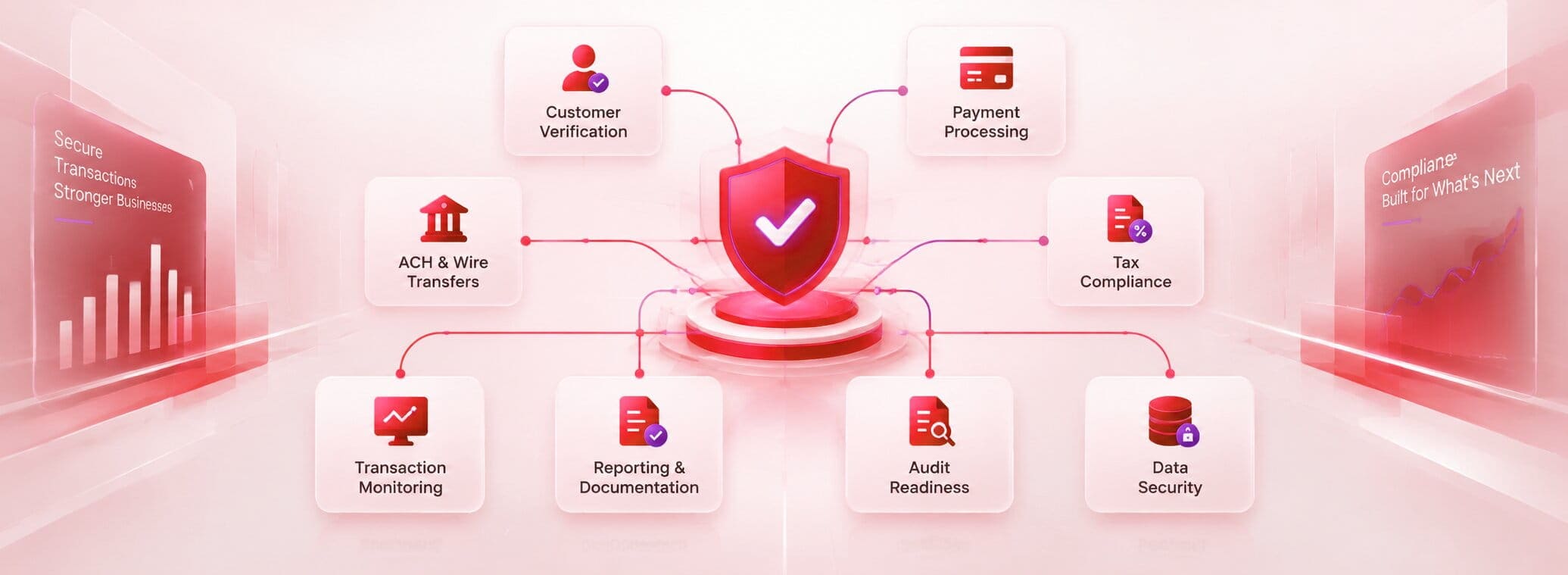
For a growing business, this can touch almost every part of daily operations:
- Customer onboarding
- Business verification
- Payment processing
- ACH and wire transfers
- Tax calculations
- Vendor payments
- Refunds and disputes
- Digital wallets
- Stored-value accounts
- Reporting and documentation
- Audit preparation
- Data security
When these areas are not managed properly, compliance problems can become expensive quickly.
Why Compliance Is Harder for Modern Businesses
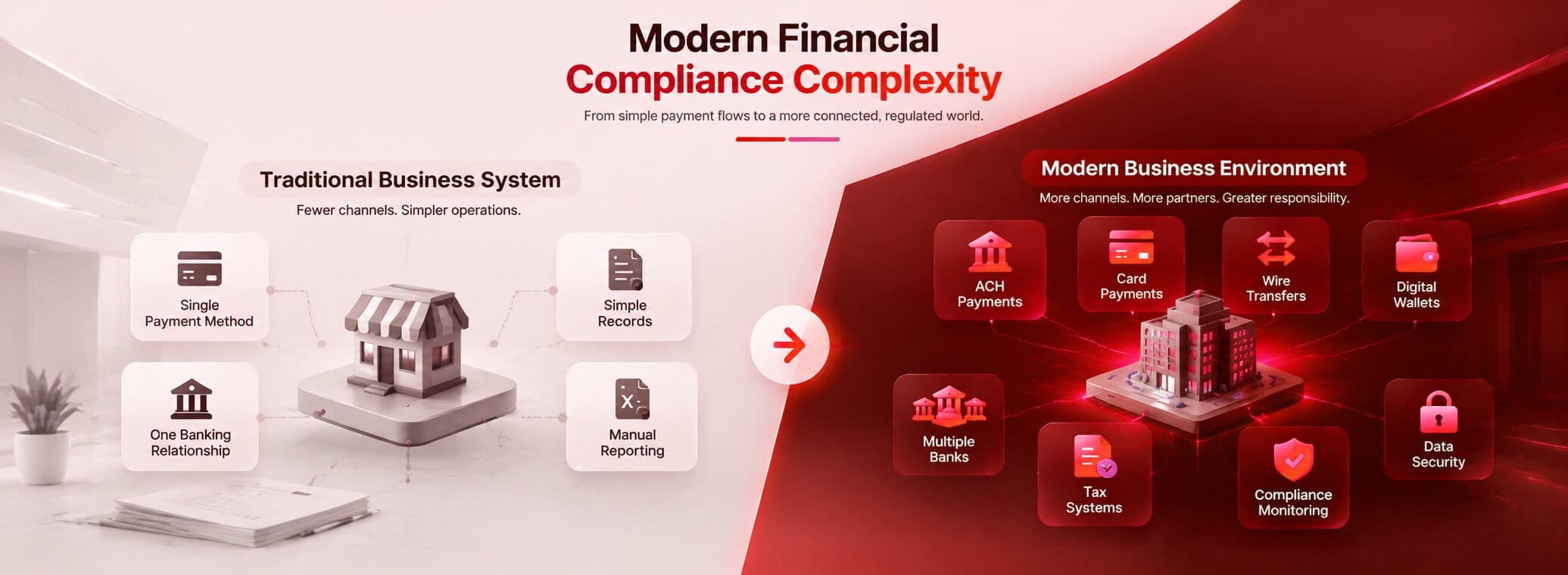
A decade ago, many companies had simpler payment flows. Today, businesses may accept cards, ACH payments, wire transfers, wallet payments, mobile transfers, escrow payments, and real-time payment methods.
That flexibility creates convenience, but it also creates responsibility.
A business may operate in several states, serve different customer types, use multiple banks, work with third-party processors, and manage sensitive financial information across several platforms. If those systems do not communicate clearly, compliance gaps appear.
The biggest problem is not always one major failure. Often, it is a collection of small weaknesses.
One document is missing. One customer verification step is skipped. One tax calculation is handled manually. One payment dispute is not recorded correctly. One vendor file is outdated. One audit trail is incomplete.
Over time, these small gaps become serious risks.
That is why businesses need structured compliance operations, not scattered manual processes.
1. Know Which Regulations Apply to Your Business
The first step is understanding which rules actually apply.
Not every business has the same compliance obligations. A fintech company, financial institution, payment platform, lender, money services business, and licensed merchant may all face different requirements.
Businesses should review their activities carefully. Are they moving money? Holding funds? Processing payments? Offering digital wallets? Supporting ACH transfers? Managing customer financial data? Helping customers send money domestically or internationally?
Each activity may create a different compliance responsibility.
This is where many businesses make mistakes. They assume compliance is only needed once they become large. In reality, financial obligations often begin as soon as the business starts handling money in a regulated way.
A smart company does not wait for a problem before building controls. It identifies its obligations early and creates systems that can scale.
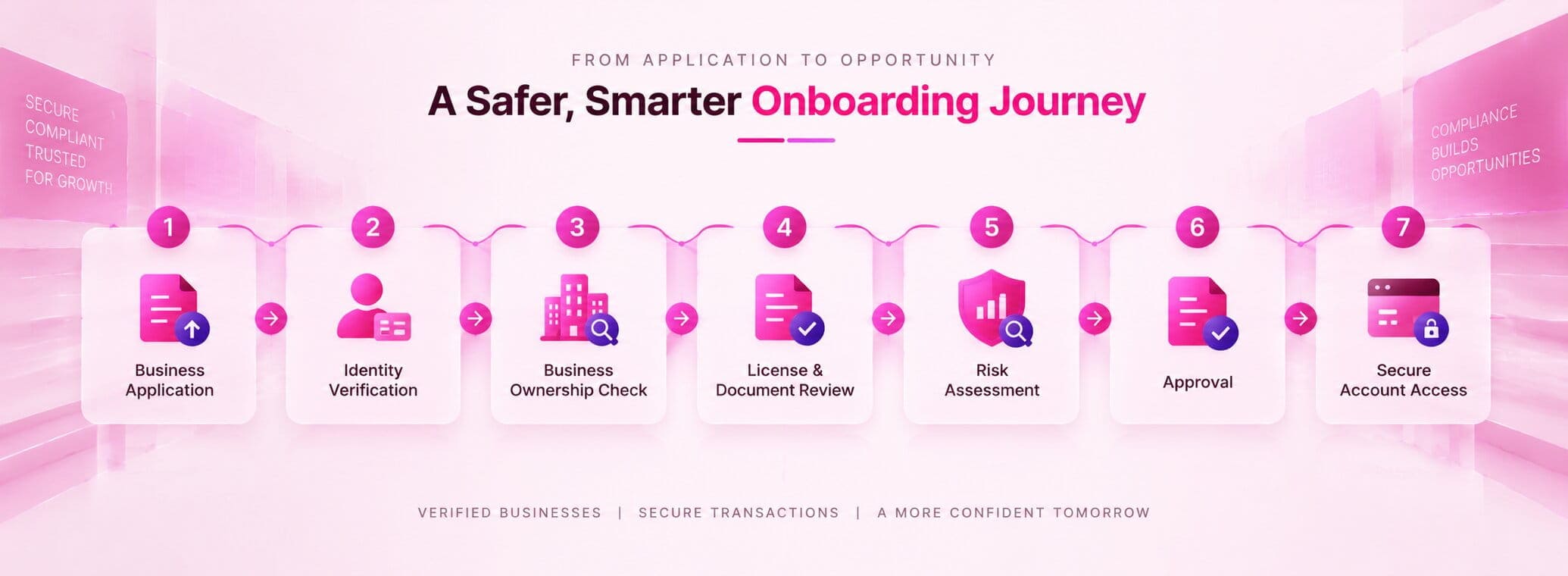
2. Build Strong Customer and Business Verification Workflows
Verification is one of the foundations of financial compliance.
Businesses need to know who they are serving, who owns the business account, who is authorized to transact, and whether the relationship creates additional risk.
For B2B companies, this may include business identity, ownership information, licensing, tax information, operating history, and transaction behavior. For consumer-facing companies, this may involve identity checks, account validation, fraud prevention, and transaction monitoring.
Good verification does not have to make the customer experience painful. The goal is to create a process that is clear, consistent, and secure.
A strong onboarding workflow should collect the right information, store it safely, keep records updated, and make it easy to review documents when needed.
When onboarding is weak, the risk shows up later through payment disputes, account closures, compliance reviews, or delayed banking approvals.
3. Keep Accurate and Accessible Records
Good compliance depends on good records.
A business should be able to answer basic questions quickly:
Who approved this transaction?
When was this customer verified?
Which account received the funds?
Was the tax amount calculated correctly?
Where is the supporting documentation?
Can the team produce records during an audit or review?
If the answer requires searching through emails, spreadsheets, old folders, and disconnected platforms, the business has a compliance problem.
Financial compliance regulations often require businesses to maintain clear documentation and support audit readiness. Even when the exact requirement depends on the industry, the principle is the same: businesses need reliable records.
Strong recordkeeping helps companies respond faster to banks, regulators, auditors, customers, and internal leadership.
It also reduces panic when something goes wrong.
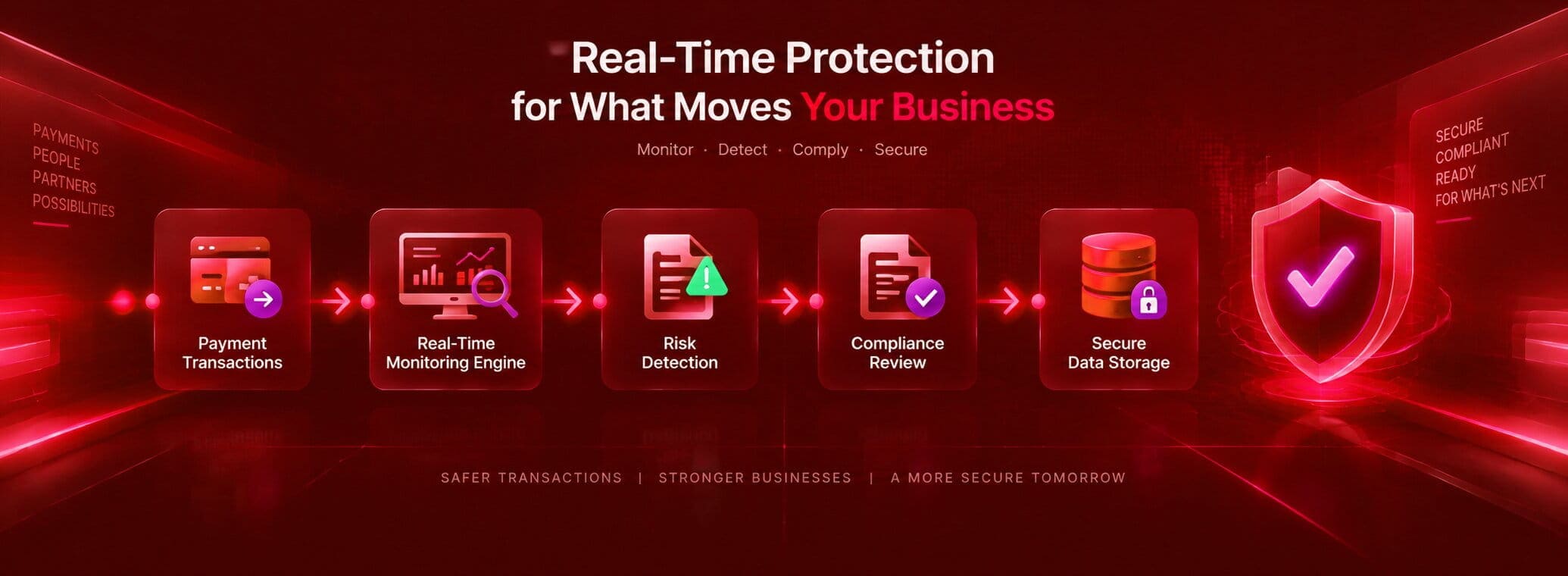
4. Monitor Transactions in Real Time
Compliance cannot rely only on after-the-fact reviews.
Modern businesses need better visibility into transactions as they happen. This is especially important when a company manages ACH payments, card payments, wires, wallet transfers, vendor payments, refunds, or settlement activity.
Real-time monitoring helps businesses detect unusual patterns, review suspicious activity, reduce fraud exposure, and maintain cleaner payment operations.
For example, a sudden spike in failed transactions, unusual refund behavior, repeated payment disputes, or mismatched account activity may signal a deeper issue.
Without monitoring, these patterns may stay hidden until they become costly.
That is why compliance monitoring should be built into the payment workflow, not treated as a separate task.
5. Protect Customer Financial Data
Customer trust depends on data protection.
Any business that collects financial information, identity details, transaction records, account data, or sensitive customer information must treat security as a core business function.
This means using strong access controls, secure storage, encryption, role-based permissions, vendor oversight, and employee training.
Data security is not only an IT issue. It is a compliance issue, a customer trust issue, and a business continuity issue.
A company can have excellent products and still lose trust if customer data is mishandled.
For financial businesses, security should be designed into every layer of the operation: onboarding, payments, reporting, account access, internal tools, and third-party integrations.
6. Automate Tax and Payment Compliance Where Possible
Manual tax and payment workflows create risk.
When teams calculate tax by hand, update payment records manually, or reconcile transactions after the fact, mistakes become more likely. These errors can lead to underpayment, overpayment, delayed filings, customer disputes, and reporting problems.
Automation helps businesses reduce repetitive work and improve accuracy.
For companies operating across multiple jurisdictions, automated tax calculation and remittance support can be especially valuable. The business needs to know what was collected, where it applies, when it should be reported, and how to keep the record clean.
The same applies to payments. Automated workflows can help track transaction status, reduce payout errors, support reconciliation, and keep financial records organized.
Financial compliance regulations are easier to manage when the business has systems that reduce manual friction.
7. Create Internal Compliance Policies
Technology matters, but policy matters too.
Every business handling financial activity should have written procedures that explain how the company manages risk. These policies should be practical, not just formal documents that nobody reads.
Useful compliance policies may cover:
- Customer onboarding
- Business verification
- Payment approvals
- Refunds and disputes
- Tax handling
- Data access
- Vendor management
- Record retention
- Employee responsibilities
- Incident response
- Audit preparation
The goal is consistency.
If one employee handles compliance one way and another employee handles it differently, the business becomes harder to control. Clear policies reduce confusion and make training easier.
They also show banks and partners that the company takes compliance seriously.
8. Train Teams Before Problems Happen
A compliance system is only as strong as the people using it.
Employees need to understand what to check, what to document, when to escalate issues, and how to avoid common mistakes.
Training does not need to be complicated. It should be practical and role-specific.
A finance team may need training on payment approvals and reconciliation. A sales team may need training on what not to promise customers. An operations team may need training on documentation and vendor files. A support team may need training on disputes, refunds, and sensitive customer information.
The best compliance training is not fear-based. It helps employees make better decisions.
When teams understand the “why” behind compliance, they are more likely to follow the process.
9. Prepare for Audits Before You Are Audited
Audit readiness should not begin when an audit notice arrives.
Businesses should build audit readiness into daily operations. That means documents are organized, records are complete, transaction histories are accessible, policies are current, and approval trails are easy to review.
A business that is always audit-ready can respond with confidence.
This helps with regulators, banking partners, internal leadership, investors, and enterprise customers. It also reduces stress for the team because the company is not rushing to rebuild missing records under pressure.
Audit readiness is one of the clearest signs of a mature compliance operation.
10. Use a Centralized Compliance Platform
One of the biggest reasons businesses struggle with compliance is fragmentation.
Payments may live in one system. Tax data may live in another. Customer documents may sit in folders. Banking records may be handled through emails. Reports may be built manually. Compliance notes may exist in spreadsheets.
This creates blind spots.
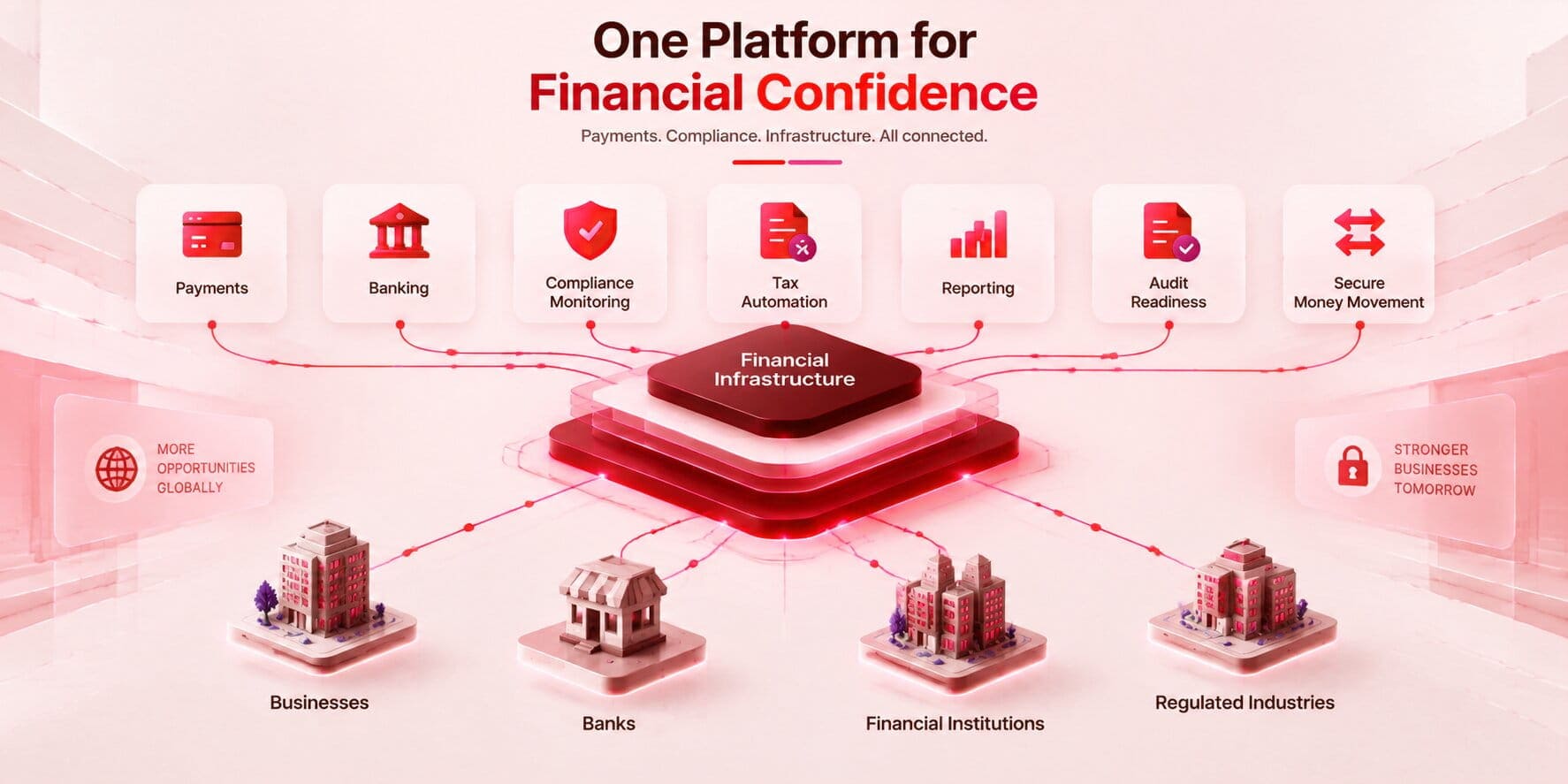
A centralized compliance platform gives businesses a cleaner way to manage financial operations, documentation, monitoring, reporting, and audit readiness.
This is where Monarch supports modern businesses.
Monarch provides financial infrastructure designed to help businesses, banks, and regulated industries move money with confidence. Its platform connects key parts of the financial workflow, including payments, invoicing, compliance, reporting, tax automation, and secure money movement.
For businesses trying to manage financial compliance regulations, the value is clear: fewer disconnected tools, better visibility, stronger documentation, and more confidence across daily operations.
How Monarch Helps Businesses Stay Compliant
Monarch is built for companies that need financial infrastructure that is simple, secure, and designed for trust.
The platform supports businesses, banks, and government partners with tools for money movement, payment operations, compliance workflows, tax automation, reporting, and audit readiness.
For businesses, Monarch helps reduce manual work and improve operational control.
For banks and financial institutions, Monarch supports verified business onboarding, compliant account workflows, and better visibility into financial activity.
For regulated industries, Monarch provides infrastructure that helps companies transact securely while maintaining stronger documentation and transparency.
That matters because compliance is not only about avoiding penalties. It is about building a business that can operate confidently, grow responsibly, and maintain stronger financial relationships.
Common Mistakes Businesses Should Avoid
Many businesses do not fail at compliance because they ignore it completely. They fail because they underestimate how quickly the work becomes complex.
Common mistakes include:
- Waiting too long to create compliance policies
- Using spreadsheets as the main compliance system
- Not updating customer or business records
- Treating payment monitoring as optional
- Ignoring tax automation until errors happen
- Failing to train employees
- Keeping documents in scattered locations
- Not preparing for audits in advance
- Assuming one state’s rules apply everywhere
- Using payment tools without proper reporting visibility
These mistakes are avoidable.
The solution is to treat compliance as infrastructure, not paperwork.
Final Thoughts
Staying compliant with financial rules is not about slowing the business down. It is about building a stronger foundation so the business can move faster with less risk.
As payments become more digital and business operations become more connected, financial compliance regulations will continue to shape how companies operate, grow, and build trust.
The businesses that succeed will be the ones that take compliance seriously before it becomes a problem. They will build better onboarding, stronger monitoring, cleaner records, safer data practices, smarter tax workflows, and audit-ready systems.
Monarch helps make that possible by giving businesses and financial partners the infrastructure they need to move money securely, manage compliance more clearly, and support growth with confidence.
If your business is ready to simplify compliance and strengthen financial operations, Monarch can help you build a smarter path forward.
Schedule a Demo With Monarch
Ready to improve compliance, reduce manual work, and move money with confidence?
Schedule a demo with Monarch and see how modern financial infrastructure can support your business.