
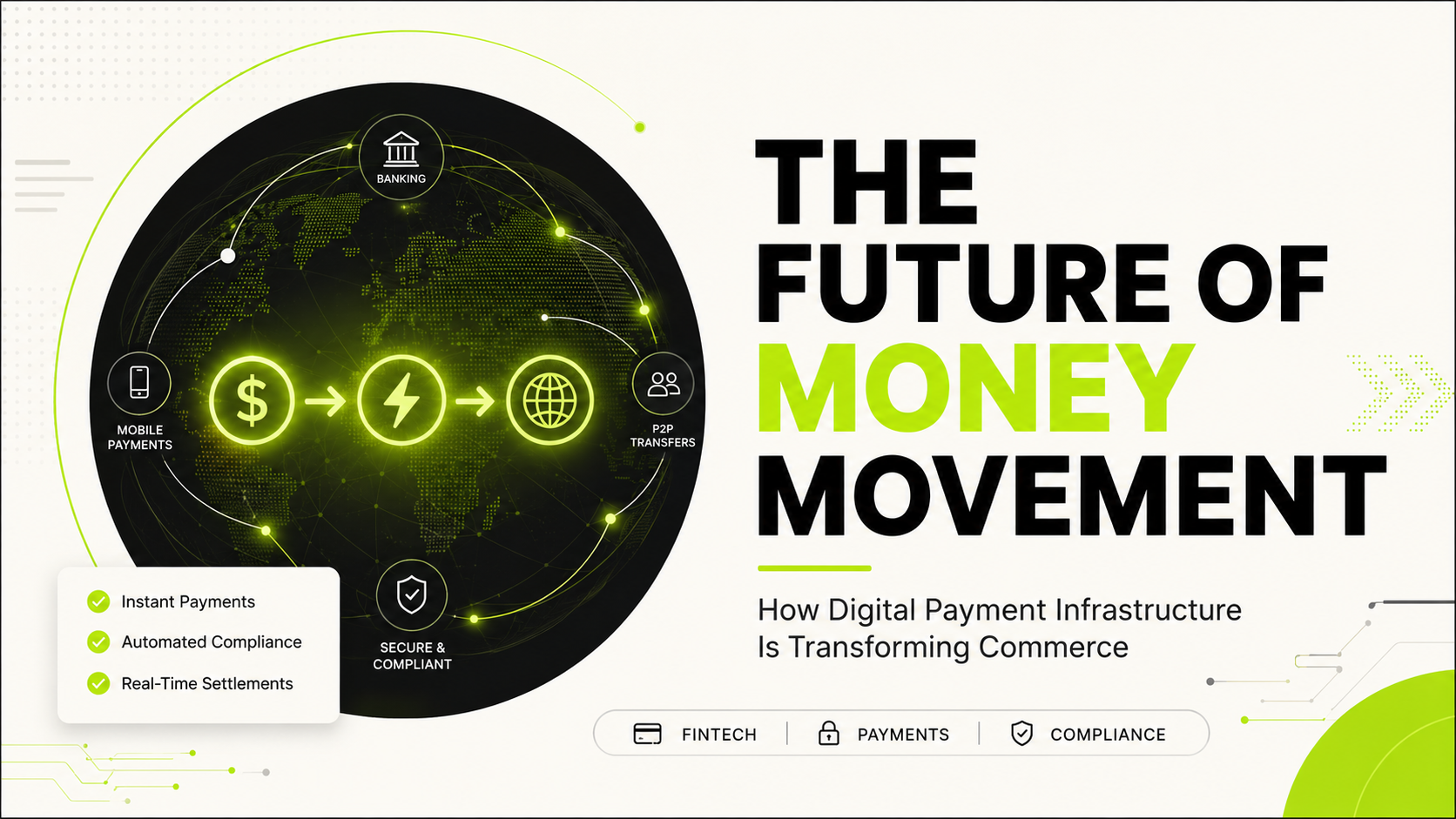
Digital commerce has changed dramatically over the last decade. Businesses no longer rely only on traditional banking systems, paper invoices, or manual cash handling to move money. Today, companies expect payments to move faster, compliance to happen automatically, and financial operations to scale without friction.
Thank you for reading this post, don't forget to subscribe!This shift has created massive demand for digital money movement platforms.
From fintech startups and regulated businesses to enterprise finance teams and payment operators, organizations are searching for secure and compliant ways to manage transactions, automate settlements, and simplify financial operations.
As global digital payment volume continues to rise, businesses are realizing that outdated financial systems can no longer support modern commerce efficiently.
This is where modern payment infrastructure platforms are transforming the industry.
The Growing Challenge of Modern Payment Operations
Many businesses still struggle with fragmented financial systems.
A company may use:
- one platform for payments
- another for compliance
- separate banking systems
- manual tax reporting
- disconnected settlement operations
This creates operational inefficiencies, compliance risks, and financial delays.
For regulated industries such as cannabis, hemp, logistics, and money service businesses (MSBs), the challenge becomes even more complex. Many traditional financial institutions still have strict onboarding requirements, limited underwriting capabilities, or inconsistent policies for regulated sectors.
As commerce becomes increasingly digital, businesses need:
- real-time payment visibility
- secure money movement
- automated compliance monitoring
- faster settlements
- scalable banking infrastructure
- integrated financial reporting
Without modern infrastructure, companies often face:
- delayed transactions
- manual reconciliation errors
- compliance penalties
- higher operational costs
- limited payment flexibility
- increased fraud exposure
According to industry payment reports, digital payments are expected to continue growing significantly as businesses shift toward automated and contactless financial operations.
What Is a Digital Money Movement Platform?
A digital money movement platform is a financial infrastructure system that allows businesses to securely send, receive, process, settle, and monitor transactions across multiple payment channels.
These platforms often support:
- ACH transfers
- wire payments
- mobile payments
- P2P transactions
- digital wallets
- vendor payouts
- settlement management
- automated taxation
- compliance workflows
Instead of relying on disconnected financial tools, businesses can centralize operations into a single ecosystem.
Modern fintech infrastructure platforms help organizations simplify complex financial workflows while maintaining regulatory compliance.
How Payment Infrastructure Is Transforming Modern Commerce
The biggest transformation happening in commerce today is automation.
Businesses no longer want slow and manual payment operations. They need systems that can process transactions quickly while reducing risk and improving operational efficiency.
Modern money movement platforms are helping businesses:
Automate Financial Operations
Automated payment infrastructure reduces manual workloads for finance teams.
Instead of manually processing invoices, settlements, and commission payments, businesses can automate:
- transaction routing
- recurring payments
- payout scheduling
- reconciliation
- reporting
- tax remittance
This improves operational accuracy while reducing costly human errors.
Improve Cash Flow Visibility
Real-time financial visibility has become essential for modern businesses.
Digital payment platforms provide:
- transaction monitoring
- settlement tracking
- reporting dashboards
- treasury visibility
- operational analytics
This allows finance teams to make faster and more informed decisions.
For growing businesses, improved cash flow visibility can directly impact scalability and profitability.
Support Faster Payments
Consumers and businesses now expect faster payment experiences.
Traditional banking systems may take several business days to complete transactions. Modern payment infrastructure enables:
- same-day ACH
- instant transfers
- mobile payments
- real-time settlements
Faster payments improve customer satisfaction and business efficiency.
Simplify Vendor & Supplier Payments
Businesses managing multiple suppliers and vendors often face payment complexity.
Money movement platforms streamline:
- supplier invoicing
- bulk payouts
- escrow services
- settlement distributions
- vendor payment approvals
This creates smoother operational workflows and reduces administrative friction.
The Compliance Challenge in Regulated Industries
Compliance remains one of the biggest challenges in financial operations.
Highly regulated industries must comply with:
- KYC requirements
- AML regulations
- transaction monitoring
- state taxation rules
- federal reporting standards
- audit documentation
Manual compliance processes are often slow, expensive, and error-prone.
Modern compliance infrastructure helps businesses automate:
- customer verification
- risk monitoring
- suspicious activity tracking
- audit preparation
- jurisdictional tax calculations
For regulated industries, compliance automation is no longer optional. It has become a critical operational requirement.
Why Security Matters in Digital Payments
As digital payment volume increases, cybersecurity risks also continue to grow.
Businesses handling sensitive financial data need enterprise-grade security infrastructure to protect:
- payment information
- banking credentials
- customer records
- transaction data
Modern fintech platforms use advanced security technologies such as:
- tokenized payment data
- encrypted transaction routing
- fraud detection systems
- real-time monitoring
- role-based access controls
Secure payment infrastructure helps businesses reduce fraud exposure while improving customer trust.
For financial institutions and enterprise operators, security and compliance now work together as part of a unified operational strategy.
The Rise of Embedded Finance and Mobile Payments
One of the fastest-growing trends in fintech is embedded finance.
Businesses increasingly want financial services built directly into their platforms instead of relying on disconnected third-party systems.
This includes:
- embedded payments
- digital wallets
- in-app transfers
- integrated banking
- mobile financial services
Mobile payment adoption has accelerated significantly as consumers demand faster and more convenient transaction experiences.
Digital wallet technology and contactless payments are becoming standard expectations across modern commerce ecosystems.
Industry Example: Regulated Businesses & Payment Infrastructure
Regulated industries often face unique banking and payment challenges.
For example, cannabis and hemp businesses may struggle with:
- limited banking access
- cash-heavy operations
- compliance complexity
- taxation reporting
- operational transparency
Modern money movement infrastructure helps these businesses:
- digitize payments
- automate compliance
- improve transaction transparency
- reduce cash handling risks
- streamline financial operations
This creates safer and more scalable business environments.
The Future of Financial Infrastructure
The future of commerce will be driven by:
- automation
- real-time payments
- embedded finance
- AI-powered risk monitoring
- compliance intelligence
- digital banking infrastructure
Businesses that modernize their payment operations today will be better positioned for long-term growth.
Financial infrastructure is no longer just a backend operational tool. It has become a strategic growth advantage.
Organizations that invest in scalable and compliant payment ecosystems can improve efficiency, reduce operational risk, and deliver better customer experiences.
How Monarch Helps Businesses Modernize Financial Operations
Monarch provides modern financial infrastructure designed to simplify the movement of money for businesses operating in complex and regulated environments.
Through integrated payment technology, compliance solutions, taxation automation, and secure transaction infrastructure, Monarch helps organizations:
- move money securely
- automate operational workflows
- improve compliance readiness
- streamline settlements
- support digital commerce growth
Whether businesses need payment infrastructure, mobile payment solutions, automated tax compliance, or secure financial operations, Monarch delivers scalable solutions built for modern commerce.
Final Thoughts
Digital money movement platforms are reshaping how businesses operate in today’s economy.
As commerce becomes faster, more connected, and increasingly digital, organizations need infrastructure that can support secure payments, compliance automation, operational visibility, and scalable financial growth.
Businesses that continue relying on outdated financial systems may struggle to compete in the evolving digital economy.
Modern payment infrastructure is no longer just a convenience — it is becoming the foundation of modern commerce.
If your organization is looking to modernize payment operations, simplify compliance, and build scalable financial infrastructure, Monarch can help you move forward with confidence.
Schedule a Demo With Monarch
Explore how Monarch’s financial infrastructure solutions can help your business simplify payments, automate compliance, and support long-term growth.