
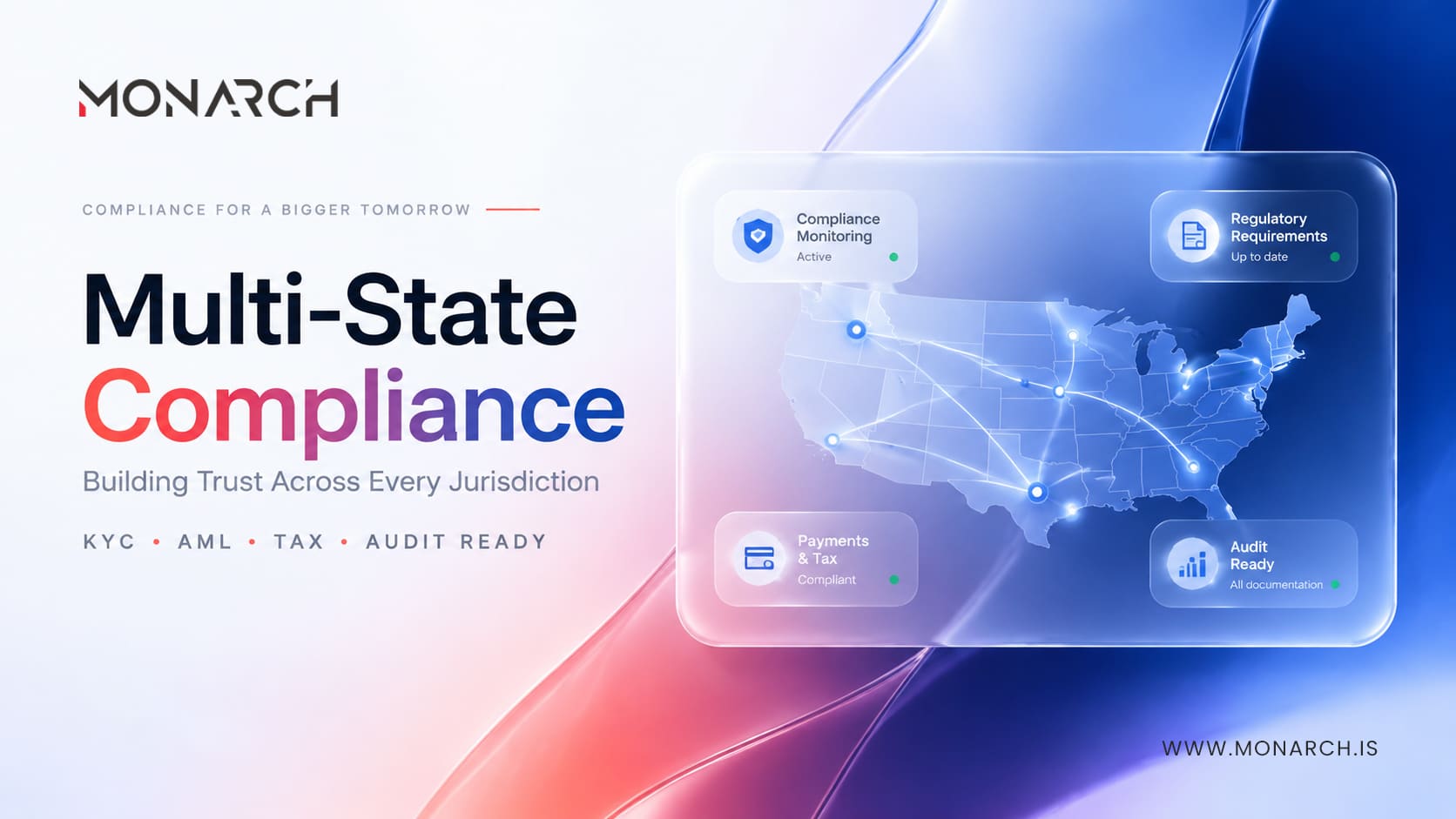
Expansion should feel exciting. New customers. New markets. More revenue. Bigger opportunities.
Thank you for reading this post, don't forget to subscribe!
But for many growing companies, the moment business crosses state lines, the rules become harder to manage. What worked in one state may not work in another. A payment process that feels simple in one region may require extra documentation somewhere else. A tax workflow that once took a few minutes can suddenly turn into a maze of state, local, and federal requirements.
That is where multi-state compliance becomes one of the most serious operational challenges for modern businesses.
For companies in payments, banking, logistics, retail, technology, financial services, and other regulated industries, compliance is no longer a back-office task. It affects onboarding, payments, tax collection, reporting, customer trust, banking relationships, and long-term growth.
The challenge is not just knowing the rules. The real challenge is building a system that can keep up as those rules change.
Why Multi-State Compliance Has Become More Difficult
Modern businesses move faster than traditional compliance systems were built to handle.
A company may sell in one state, hire employees in another, process payments through a banking partner in a third, and work with vendors across the country. Each state can bring its own rules around registration, taxation, licensing, reporting, customer verification, payroll, payment processing, or documentation.
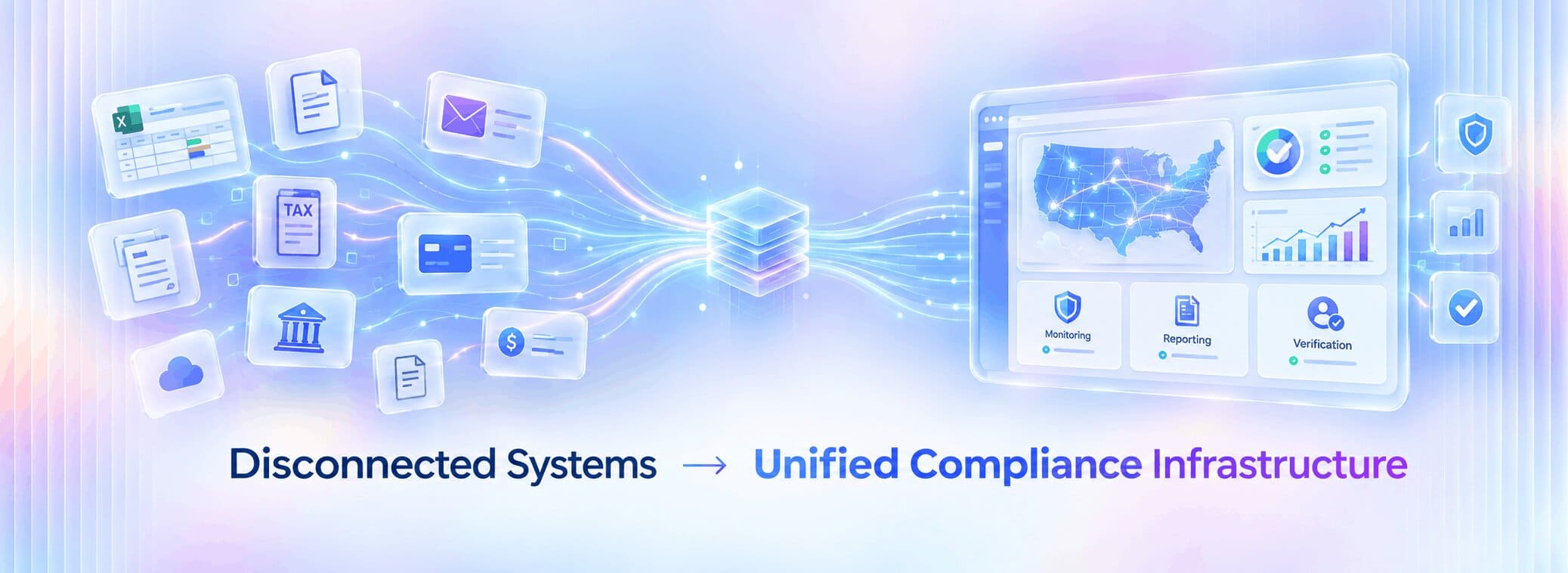
Multi-state compliance becomes especially difficult when a business is growing quickly but still relying on manual processes. Spreadsheets, email chains, disconnected payment tools, and one-off document folders may work in the beginning. But once the company expands, those systems create risk.
A missing document can delay onboarding. A tax calculation error can create penalties. A weak audit trail can slow down a bank review. A payment issue can trigger disputes, returns, or compliance questions.
For regulated industries, the pressure is even higher. Businesses need to prove that their money movement, customer onboarding, tax handling, and transaction records are accurate, secure, and reviewable.
The Biggest Multi-State Compliance Challenges Businesses Face
1. Different State Rules Create Operational Confusion
One of the hardest parts of operating across multiple states is that the rules are not always consistent.
A business may face different tax requirements, licensing expectations, reporting timelines, documentation standards, or banking review processes depending on where it operates. This creates confusion for leadership teams, finance teams, compliance teams, and operations staff.
The problem grows when teams do not have a centralized system. One department may update a document. Another may use an older version. A bank partner may request information that the business cannot quickly locate.
This is how compliance problems begin—not always from bad intent, but from scattered operations.
2. Manual Compliance Work Does Not Scale
Manual compliance can feel manageable when a business is small. A team member collects documents, checks forms, updates spreadsheets, and sends reports when needed.
But manual work becomes fragile at scale.
As the number of states, customers, vendors, payments, and tax obligations increases, manual tracking creates more room for mistakes. Businesses may miss renewal dates, store outdated records, calculate taxes incorrectly, or struggle to prepare for reviews.
In regulated commerce, speed matters—but accuracy matters more. A company that grows without a reliable compliance system may create hidden risk faster than it creates revenue.

3. Payments Add Another Layer of Risk
Payments are not just transactions. They are records of business activity.
When a company accepts cards, ACH, wires, escrow payments, digital transfers, or wallet-based payments, each transaction may require proper authorization, monitoring, reconciliation, reporting, and dispute management.
For businesses operating across multiple states, payment compliance becomes more complex because transaction flows may involve different customers, vendors, banks, jurisdictions, and reporting expectations.
Without strong compliance monitoring, businesses can lose visibility into where funds are moving, who authorized the payment, what tax applies, and whether the proper documentation exists.
That is why payment infrastructure and compliance infrastructure should not be treated as separate systems. They need to work together.
4. Tax Collection and Remittance Can Get Complicated Fast
Tax obligations are one of the most common pain points for businesses operating across state and local boundaries.
Different jurisdictions may have different tax rules, rates, filing requirements, and remittance schedules. For businesses collecting payments at scale, even a small tax calculation error can become expensive if repeated across hundreds or thousands of transactions.
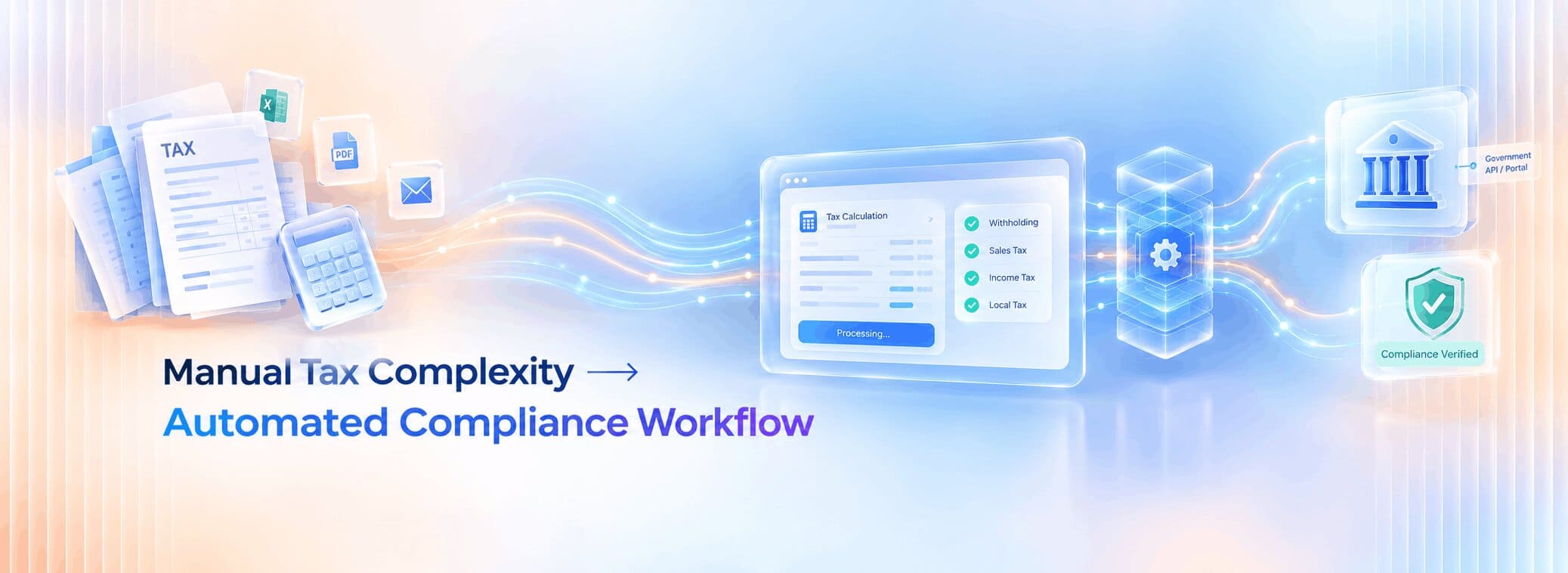
This is a major reason companies are looking for smarter tax automation tools. The goal is not only to calculate taxes correctly, but also to create a clear record of what was collected, when it was collected, where it should be sent, and how it was reported.
When tax workflows are disconnected from payment workflows, finance teams are forced to reconcile information after the fact. That creates delays, manual work, and avoidable risk.
5. Onboarding Can Slow Down Banking Relationships
Banks and financial institutions need confidence before they support certain business accounts, payment flows, or merchant relationships. That means businesses may need to provide documentation related to licensing, ownership, identity, business activity, financial operations, and compliance controls.
When onboarding is slow, revenue slows with it.
A business that cannot quickly provide the right documents may wait longer to open accounts, process payments, or access needed financial services. For banks and credit unions, the challenge is similar. They need a scalable way to review and support businesses without creating unnecessary operational burden.
This is where centralized onboarding and document management become valuable. Instead of chasing files across emails and folders, businesses and financial partners need a cleaner way to collect, review, update, and monitor compliance records.
The Hidden Cost of Poor Multi-State Compliance
Many businesses only think about compliance when something goes wrong.
But poor multi-state compliance creates hidden costs long before a penalty appears.
It can slow down account approvals. It can delay payments. It can create uncertainty with vendors. It can increase manual labor inside the finance team. It can weaken reporting quality. It can make audits stressful. It can damage banking relationships. It can also make leadership hesitant to expand into new markets.
For a modern business, compliance should not feel like a roadblock. It should feel like infrastructure.
Strong compliance operations help companies move faster because the right controls are already in place. Teams know where documents are stored. Payments are easier to monitor. Tax data is easier to review. Audit trails are easier to produce. Leadership has more confidence when entering new states or supporting new customers.
In other words, compliance is not only about avoiding risk. It is also about building a business that can grow without breaking its own systems.
How Monarch Helps Simplify Multi-State Compliance
Monarch is built for businesses, banks, and financial partners that need a more reliable way to manage money movement, payments, tax workflows, documentation, and compliance operations.
Instead of forcing teams to rely on disconnected tools, Monarch brings critical financial infrastructure into a more unified system. The platform supports compliance-focused operations across payments, onboarding, monitoring, tax automation, reporting, and audit readiness.
For businesses, that means better visibility and fewer manual steps.
For banks and credit unions, that means a more structured way to support verified businesses and manage documentation.
For regulated industries, that means a stronger foundation for operating with confidence across different jurisdictions.
Monarch’s compliance approach is especially useful for companies that need to manage state and federal requirements while still keeping daily operations efficient. The platform is designed to help organizations reduce complexity, improve transparency, and keep financial workflows moving.
Why Centralized Compliance Infrastructure Matters
A growing business cannot afford to treat compliance as a collection of disconnected tasks.
A modern compliance system should help answer practical questions quickly:
Where are the required documents?
Which customers or merchants have been verified?
Are payments properly tracked?
Are tax obligations being calculated and recorded?
Can the business produce audit-ready reports?
Are onboarding workflows consistent across states?
Can leadership see operational risk before it becomes a bigger issue?
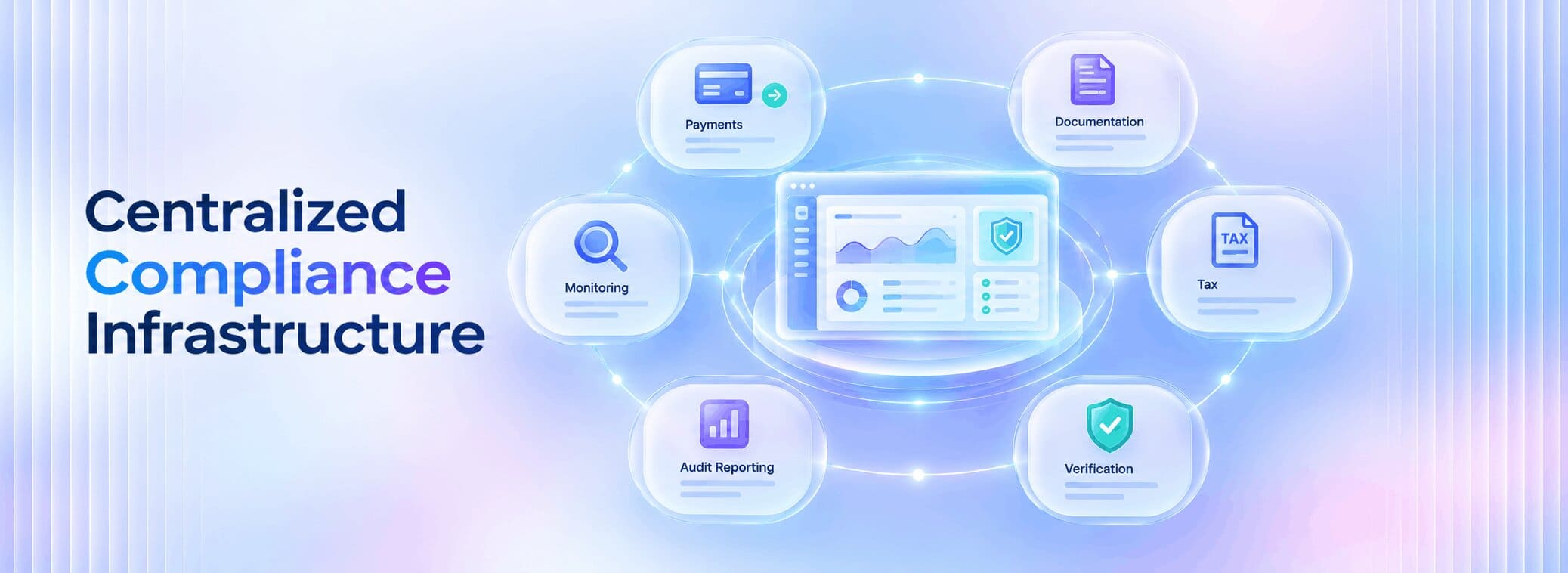
When these answers live in separate tools, compliance becomes reactive. When they live inside a centralized infrastructure, compliance becomes proactive.
That is the difference between simply trying to stay compliant and actually building a business that is ready to scale.
What Businesses Should Look for in a Compliance Platform
Not every compliance tool is built for modern financial operations. Businesses should look for a platform that can support both regulatory needs and real-world operations.
A strong compliance platform should offer:
- Centralized document management
- Real-time monitoring
- Payment visibility
- Tax workflow support
- Onboarding controls
- Audit-ready reporting
- Secure data handling
- Scalable processes for multiple states
- Support for regulated business models
- Clear operational records
The right system should reduce confusion, not add another layer of complexity.
It should help teams move faster while maintaining control. It should make reporting easier. It should support better communication between businesses, banks, vendors, and compliance teams.
Most importantly, it should help the business operate with confidence.
Compliance Is Now a Growth Strategy
For years, many companies treated compliance as a defensive function. The goal was simple: avoid fines, avoid problems, and stay out of trouble.
That mindset is outdated.
Today, compliance is part of growth strategy.
A company with strong compliance infrastructure can enter new markets more confidently. It can support new payment methods. It can build stronger banking relationships. It can onboard customers faster. It can respond to audits with less stress. It can reduce operational waste and protect its reputation.
In regulated industries, trust is a competitive advantage. Businesses that can prove they operate with transparency, documentation, and control are better positioned to grow.
That is why compliance should not be pushed to the end of the business plan. It should be built into the operating system from the start.
Final Thoughts
Modern businesses are no longer limited by state lines. Customers, vendors, payments, employees, and financial relationships can now stretch across the country.
But growth across states comes with responsibility.
The companies that win are not always the ones that move the fastest. They are the ones that build the strongest foundation.
Multi-state compliance challenges will continue to grow as payments become more digital, regulations evolve, and businesses expand into new markets. Companies that rely on manual systems will feel more pressure. Companies that invest in centralized compliance infrastructure will be better prepared.
Monarch helps businesses and financial institutions simplify complex compliance workflows by connecting payments, onboarding, tax automation, reporting, and audit readiness into a more reliable financial infrastructure.
If multi-state compliance is slowing down your business, Monarch can help you build a smarter, safer, and more scalable way to move money and manage compliance across jurisdictions.
Schedule a Demo With Monarch
Ready to simplify compliance, strengthen payment operations, and support growth across multiple states?
Schedule a demo with Monarch and discover how modern financial infrastructure can help your business operate with more confidence.