
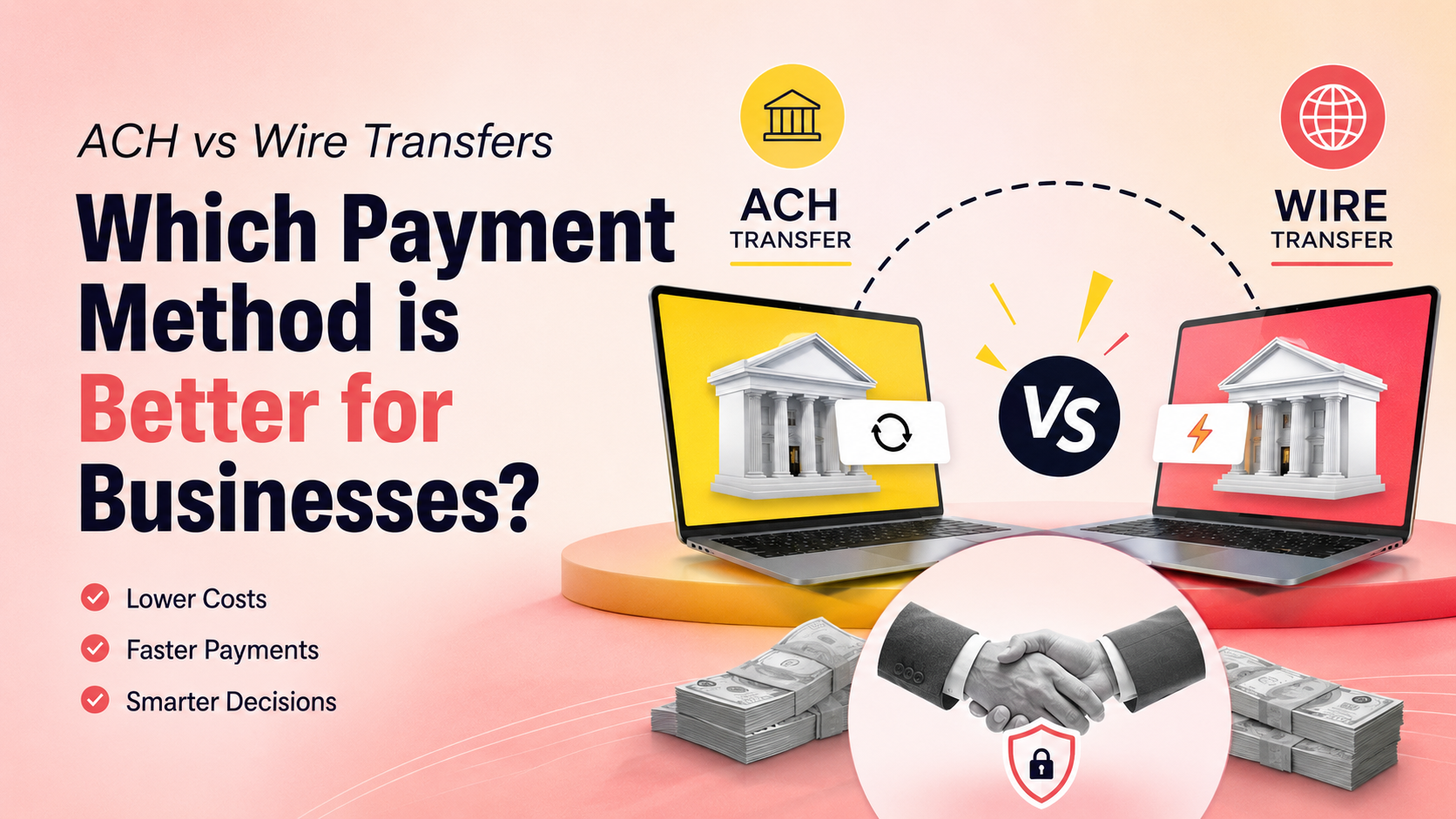
Modern businesses move money constantly.
Thank you for reading this post, don't forget to subscribe!
From payroll and supplier payments to vendor settlements and customer transactions, companies depend on reliable payment systems to keep operations running smoothly. As digital commerce continues to grow, businesses are increasingly looking for faster, safer, and more cost-effective ways to transfer funds.
Two of the most common payment methods used today are ACH transfers and wire transfers.
While both options allow businesses to move money electronically, they serve different purposes and come with unique advantages, costs, and operational considerations.
Understanding the difference between ACH and wire transfers can help businesses improve financial efficiency, reduce costs, and make smarter payment decisions.
The Growing Demand for Digital Payment Infrastructure
Businesses today operate in a much faster financial environment than they did even a decade ago.
Companies now expect:
- real-time financial visibility
- automated payment workflows
- secure digital transactions
- scalable banking infrastructure
- faster settlements
Traditional manual payment systems can create delays, reconciliation challenges, and operational inefficiencies.
As payment volume continues to increase across industries, businesses need modern financial infrastructure that supports:
- automation
- compliance
- payment flexibility
- operational scalability
ACH and wire transfers both play an important role in modern payment ecosystems.
However, choosing the right payment method depends on:
- transaction size
- urgency
- security requirements
- operational goals
- compliance needs
What Is an ACH Transfer?
ACH stands for Automated Clearing House.
An ACH transfer is an electronic bank-to-bank payment processed through the ACH network. ACH payments are commonly used for:
- payroll deposits
- recurring billing
- vendor payments
- direct deposits
- subscription payments
- business-to-business (B2B) transactions
ACH transfers are popular because they are:
- cost-effective
- reliable
- scalable
- well-suited for recurring transactions
Most ACH payments are processed in batches rather than individually, which helps reduce transaction costs.
What Is a Wire Transfer?
A wire transfer is a direct electronic transfer of funds between financial institutions.
Unlike ACH payments, wire transfers are processed individually and typically move funds much faster.
Wire transfers are commonly used for:
- large transactions
- international payments
- time-sensitive transfers
- real estate transactions
- enterprise settlements
Wire transfers are often preferred when speed and immediate settlement are critical.
ACH vs Wire Transfers: Key Differences
Although ACH and wire transfers both move money electronically, they function very differently.
Speed of Transactions
ACH Transfers
ACH payments usually take:
- same day
- one business day
- or several business days
depending on the processing schedule and financial institutions involved.
ACH processing is generally slower because transactions move through batch processing systems.
Wire Transfers
Wire transfers are significantly faster.
Many domestic wire transfers settle:
- within hours
- or the same business day
International wires may take longer depending on:
- banking networks
- currency conversion
- regulatory requirements
For urgent payments, wire transfers are often the preferred option.
Transaction Costs
ACH Transfers
ACH payments are generally low-cost.
Businesses often use ACH for:
- recurring payments
- payroll
- vendor invoices
- subscription billing
because transaction fees are typically minimal compared to wire transfers.
This makes ACH ideal for businesses processing high payment volumes.
Wire Transfers
Wire transfers usually involve higher fees.
Costs may include:
- sending fees
- receiving fees
- intermediary bank fees
- international processing fees
For businesses making large or urgent transfers, the higher cost may still be worthwhile.
Security Considerations
Both ACH and wire transfers can be highly secure when supported by strong financial infrastructure and compliance controls.
However, each payment method has different risk considerations.
ACH Security
ACH payments often include fraud protection and dispute resolution capabilities.
Businesses benefit from:
- transaction monitoring
- authentication controls
- account verification
- automated payment records
ACH systems are widely trusted for recurring and operational payments.
Wire Transfer Security
Wire transfers are generally secure but can carry higher fraud risk if payment instructions are compromised.
Because wire transfers settle quickly and are often irreversible, businesses need:
- strict authorization controls
- identity verification
- transaction monitoring
- cybersecurity protections
Many organizations implement multi-step approval processes for large wire transfers.
Which Payment Method Is Better for Businesses?
The answer depends on the business use case.
There is no single payment method that works best for every situation.
When ACH Transfers Make More Sense
ACH payments are often better for:
- payroll processing
- recurring billing
- vendor payments
- subscription services
- routine operational expenses
- high-volume payment environments
Businesses that prioritize:
- lower costs
- automation
- recurring payment efficiency
often rely heavily on ACH infrastructure.
When Wire Transfers Make More Sense
Wire transfers are usually better for:
- urgent transactions
- large-value payments
- international transfers
- time-sensitive settlements
- enterprise financial operations
Businesses that prioritize:
- payment speed
- immediate settlement
- transaction certainty
may choose wire transfers despite the higher cost.
Operational Challenges Businesses Face
Many businesses still struggle with fragmented payment systems and outdated banking workflows.
Common operational challenges include:
- delayed settlements
- manual reconciliation
- inconsistent reporting
- compliance complexity
- payment visibility issues
- fraud prevention concerns
As businesses scale, these challenges become more difficult to manage manually.
This is why modern organizations are increasingly investing in payment infrastructure platforms that centralize:
- ACH processing
- wire transfers
- compliance monitoring
- reporting
- transaction management
into a single ecosystem.
The Role of Compliance in Business Payments
Compliance plays a major role in digital payment operations.
Businesses handling electronic transactions must often comply with:
- KYC requirements
- AML regulations
- transaction monitoring standards
- financial reporting obligations
- state and federal regulations
For regulated industries such as:
- fintech
- cannabis
- hemp
- logistics
- money service businesses (MSBs)
payment compliance becomes even more important.
Modern financial infrastructure helps automate compliance workflows while improving operational transparency.
Payment Trends Shaping Modern Commerce
Several major trends are influencing how businesses manage payments today.
Real-Time Payments
Businesses increasingly expect faster payment processing and improved settlement visibility.
Real-time payment infrastructure is becoming a competitive advantage.
Embedded Finance
Companies are integrating financial services directly into their platforms through:
- embedded payments
- digital wallets
- API-driven banking
- automated transfers
This reduces operational friction and improves customer experience.
Payment Automation
Organizations want to reduce manual financial processes.
Automation helps businesses:
- improve accuracy
- reduce administrative costs
- accelerate payment workflows
- enhance reporting visibility
How Modern Payment Infrastructure Supports Business Growth
Businesses today need more than just payment processing.
They need financial infrastructure that supports:
- operational scalability
- compliance automation
- secure transactions
- financial reporting
- treasury visibility
- multi-channel payments
Modern money movement platforms help businesses simplify complex financial operations while reducing risk.
How Monarch Helps Businesses Simplify Payments
Monarch provides secure financial infrastructure designed to support modern payment operations.
Through integrated payment technology and compliance-focused solutions, Monarch helps businesses:
- process ACH payments
- support secure money transfers
- automate payment workflows
- streamline settlements
- improve transaction visibility
- strengthen compliance readiness
Monarch’s infrastructure helps organizations manage financial operations more efficiently while supporting scalable growth in modern commerce environments.
Final Thoughts
ACH and wire transfers both play important roles in modern business payments.
ACH transfers are often the better choice for:
- recurring payments
- lower transaction costs
- operational efficiency
Wire transfers are often preferred for:
- urgent transactions
- high-value payments
- immediate settlements
The right solution depends on the needs of the business, the type of transaction, and the operational goals of the organization.
As digital commerce continues evolving, businesses need payment infrastructure that combines:
- speed
- security
- compliance
- scalability
- operational visibility
Modern financial operations depend on reliable money movement systems — and businesses that modernize their payment infrastructure will be better positioned for long-term growth.
Schedule a Demo With Monarch
Learn how Monarch helps businesses simplify payment operations, improve compliance, and build scalable financial infrastructure for modern commerce.